Showing posts with label Recommendations. Show all posts

Sunday, October 6, 2013

Bunker Hill


I recently finished Bunker Hill by Nathaniel Philbrick.  I really enjoyed this detailed telling of the months leading up to and including Lexington and Concord and the battle of Bunker Hill.  Revolutions have always been messy and never as simple and straight forward as history books would have us believe.  I really liked how Philbrick was able to flesh out these historical characters and make them seem like real people.  Extensive notes by page number at the back of the book provide further insight.

Nathaniel Philbrick states that his interest in this time period was first piqued as a young boy while reading Johnny Tremain by Esther Forbes.  It was a Newbery Award winning book in 1943.  Esther Forbes was a historian, not a novelist and certainly not a novelist for young readers.  In 1943 she won a Pulitzer Prize for Paul Revere and the World He Lived In published in 1942 which was a historical work for an adult audience.  Now she was taking what she had learned to try to tell the story of a young boy growing up in Boston based on a small but true incident of a boy delivering a message about British movements to Paul Revere.

Her manuscript was much like Margaret Mitchell's for Gone with the Wind, that is a stream of words with no punctuation and guessed at spelling.  Editors cleaned both books up and they became classic historical novels of crucial times in United States history.  Johnny Tremain was published during the middle of World War II, another critical time in United States history.  It is suggested that Esther Forbes decided to write this novel because of the current world war as a way to let young readers know why the United States was fighting another war and that it is important to stand up for democratic principles.


After finishing Bunker Hill and reading about Philbrick's inspiration, I decided to also read Johnny Tremain.  It was easy because I had picked up a paperback in early summer along with other books thinking it might be read by a visiting grandchild.  It is a great historical telling of this important time in our national history.


I really thought I had read Johnny Tremain during my childhood years but the book didn't feel familiar.  I think the Johnny Tremain that I remembered was the Disney version first released in the late 1950's.


It would be very interesting to watch that movie again all these years later.  I recommend both books.

Thursday, March 29, 2012

Quiche times two

I am a master of yeast breads and cookies. I struggle with pie crust. I had a hankering for quiche, so while at Walmart I searched and searched for frozen pie crusts. Not finding any, I wandered over to the refrigerated bins and found a box claiming to hold two rolled out rolled up pie crusts. I was a bit skeptical, but decided it was my only option rather than trying once again on my own.

I must confess that on the way to checkout, I once again went down the freezer aisle where I finally noticed on the very bottom shelf a couple of frozen pie crusts, but I ventured on. I was intrigued by the box. It did indeed contain two individually wrapped pie crust rounds rolled out and ready to place in a pie plate. The pie dough was pliable and easy to work with. (I owe the beautifully crimped edge to my mother whom I watched over and over as she crimped her own pie crusts. Don't know why I didn't get the other part.) It made a fine spinach quiche with feta and cheddar.

The quiche tasted so good that a couple of nights later I used the other crust to make a broccoli one. (Note: Quiche tastes better when the veggies come from your garden :)

Will I buy this product again? You better believe it! Never again will I buy a frozen crust. Don't you just hate how the frozen edges break off or the frozen crust cracks in the middle. Do you think that I just have a pie crust phobia which could be conquered with practice? We'll probably never know because I think I will keep using this product.

Quiche the simple way:

Melt 2 tablespoons butter in frying pan. Add one small diced onion cooking until translucent. Add 2 finely diced garlic cloves cooking about 90 seconds. Add 2 cups chopped broccoli OR 2 cups tightly packed fresh spinach leaves rolled together and sliced in strips. Continue cooking until softened. Place vegetable mixture into pie crust lined pie pan.

Beat together 4 eggs. Add 1 1/2 cups milk or cream (or a mixture of milk and cream.) Add a tsp. of freshly ground pepper and 1 1/2 to 2 cups of shredded cheese (cheddar, swiss, feta or a mixture) to liquid. Pour over veggies. May add small amount of shredded cheese to top of quiche for color. Bake in a 375 degree preheated oven for 30 - 40 minutes or until middle is set. (I baked at 350 degrees in my convection oven.)

Could you add bacon? Of course, if you have some. Or ham? Of course, especially after Easter dinner. Enjoy! And don't let making pie crust slow you down, just head on over to your local Walmart.

Monday, February 20, 2012

President's Day read

I recently finished this fun read by Matthew Algeo. Within months of leaving Washington, D.C., Harry Truman is on his way back for a visit. He drives his own new car and travels without the benefit of any help or Secret Service agents. That is yet to be in the summer of 1953.

I really enjoyed following the road trip place by place, but even more I loved all the little tidbits of information such as what was happening elsewhere in the world each day of the journey. It was interesting to have a view into the window of the United States when I was just a months old baby.

My mother, the ever consistent Republican, always spoke highly of Truman. The more I learn of him (and that includes reading "Truman" by David McCullough) I find myself in agreement. Perhaps it has something to do with him being an unwilling president, nominated under duress to be the vice presidential candidate to Franklin Roosevelt and only then becoming aware of the precarious health of the President. Just 100 days or so into Franklin Roosevelt's fourth term, Truman inherits the presidency while the world is in true turmoil. Perhaps that's more appealing than a candidate for president who plans and schemes for years in preparation.

Thursday, February 16, 2012

Where place is main character

Now that I've admitted leaping aboard the "Downton Abbey" fan wagon, I've been thinking about how special locations or places sometimes become a large part of the story, the main character if you will. "Downton Abbey" is shot at Highclere Castle located in Hampshire, England. Interestingly, Lady Almina, the 5th Countess of Carnarvon, converted Highclere Castle into a hospital in September of 1914 in time to welcome the wounded from the fields of Flanders. The 8th Countess of Carnarvon has written a book entitled "Lady Almina and the Real Downton Abbey." I am on the long waiting list at the library. I am also on my own dream list of places to see before I die for a visit to England, its gardens, and perhaps Highclere Castle which opens again for visitors Easter 2012.

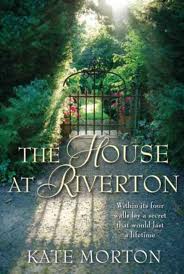
When thinking of place as main character, I couldn't help but think of the novels of Kate Morton. All are set in England and the place drives the story. Does England with it country estates, beautiful gardens, and a castle or two lend its self to this type of story? As I pondered place as character in the United States, "Gone with the Wind" came to mind. Can you think of or share any others?

I have enjoyed these three Kate Morton books based on a place, a time in history, a bit of mystery, and interesting characters some of which have a dark side.


I especially enjoyed this one with its own secret garden. Ah, "The Secret Garden" another book where place is of most importance.


"The Distant Hours" was my most recent read and perhaps the most disturbing. The place, the castle, becomes more important than the people with an inglorious ending. I understand that Kate Morton is releasing a new book sometime in 2012. I look forward to seeing if it will include a special place.

Monday, February 13, 2012

Valentine's Day and Love


I hope that you will be enjoying a lovely Valentine's Day. I "love" this plant stake almost as much as I love the luscious geranium in the pot. Glen brought the geraniums home in 4 inch pots from Berridge Nursery last fall and over the past month they have come into their own. Such a lovely color and the leaf foliage is also beautiful.

This year I was not going to be in Arizona for the traditional sugar cookie decorating so I prepared "cookie kits" and delivered them to the grand kids before I left. The kits included sugar cookies made from this recipe, butter cream frosting, and red sugar sprinkles.

On the lid, I taped this love note explaining why they were getting a kit. I love the computer and word processing. It was so easy to select a template with the gingham red and white, insert my own pictures, and change the text.

This morning Glen and I went to Shirley's Bakery here in Provo. There was a table stacked with Valentine cookie kits, but they didn't have a cute cover letter. There were also mounds of decorated cookies as well as undecorated cookies. As we paid for our bread, the lady behind the counter said that they had baked thousands and thousands of cookies.

I just baked 150, one batch in Arizona and another in Utah. It took several hours, but it was a great way to spread the love.

Tuesday, February 7, 2012

Norvelt Newbery

There are some things that don't change with retirement. As a retired elementary school librarian, I still get anxious in January waiting to hear about the book award winners in children and young adult literature for the year. Then I quickly add the winners, especially the Newbery, to my TBR list. Dead End to Norvelt by Jack Gantos was this year's Newbery and the boys out there are going to love it.

Gantos book is largely autobiographical, the main character is even named Jack Gantos, and the setting is a real one. The town of Norvelt, located in western Pennsylvania, was built in the 1930's and named after Eleanor Roosevelt (nor + velt) in 1935. There is lots of blood (bloody nose kind of blood), WWII souvenirs, rodents, mysterious deaths, and even a few Hells Angels riding through town. What's not for a boy to like? There are also interesting multi-age characters, tidbits of history, and great examples of service being performed for others.

Did I like it? Yes, I did and I immediately found myself typing Norvelt on Google. I enjoyed the writing style and the easy interweaving of history throughout the narrative. I immediately thought of my oldest grandson. I'm almost certain he would love this book.

Sunday, January 22, 2012

Presidential health, egos, and deceit

I just finished The President is a Sick Man by Matthew Algeo. Click on the picture to read the blue print for a synopsis. I never knew that Grover Cleveland had secret surgery to remove a growth on the roof of his mouth while at sea, did you? I found it fascinating to read of the economic upheavals of 1893 and Cleveland's decision to keep his health problems a secret.

But then, think how often the public has not been told the "whole story." FDR's paralysis was glossed over, Woodrow Wilson suffered a massive stroke which was kept under wraps for seventeen months, Kennedy had Addison's a renal disease, and Nancy Reagan tried to pass off the excision of a skin cancer from President Reagan's face as a pimple.

James A. Garfield did not try to hide his medical condition but his doctors did after the attempted assassination of Garfield just four months after being sworn in as president in 1881. The bullet that entered his body did not kill him, but the lack of sterile medical care did. It is surmised that the dirty fingers of doctors probing his wound for the bullet caused the infection which eventually took his life eighty days later.

Destiny of the Republic by Candice Millard is a fascinating telling of the medical care provided Garfield and of the egos of doctors which prevented them from doing what was best for their patient. An English surgeon, Joseph Lister, had proven the worth of the sterile, aseptic conditions in the late 1860's but American surgeons were slow to accept his methods. By 1893, Cleveland was afforded sterile conditions while undergoing surgery while on a yacht on Long Island Sound. He lived 15 more years. Part of the reason for Cleveland's cover up, other than the turbulent financial and political times, was the public's recent memory of the horrible death of President Ulysses S. Grant from throat cancer in 1885. Perhaps they smoked too many cigars.

I found both books to be very interesting and enjoyed the additional tidbits of historical and medical information from the late 1800's.

I very much enjoyed some months back, this book, The River of Doubt also by Candice Millard. It is the story of the exploration of an unknown river in the Amazon region of Brazil by Theodore Roosevelt and his son, Kermit in 1914. And yes, it almost killed Roosevelt to do so.

Tuesday, January 10, 2012

Book of Mormon Reading

LinkGlen and I are reading a different than our usual version of the Book of Mormon and loving it. Glen has been fascinated with chiasmus and other forms of Hebrew poetry found in the Book of Mormon for some time. This is a large, paperback version reprinted so that the poetic forms are readily apparent.

I am loving all that white space. It seems to allow my brain to "see" or visualize what I am reading in a new way. This version is published by BYU. We both recommend it!

Saturday, December 31, 2011

Falvia de Luce entertains me

I first blogged about Flavia de Luce here. I was entranced with 11-year-old Flavia and her unusual skills and ability in solving mysteries while having adventures. Time passed by and I was unaware that Alan Bradley was busy writing sequel after sequel after sequel. That meant catch up reading time during the month of December after I became aware that there was more Flavia de Luce.

I read them in order and realized that Flavia was living out her 11th year book by book and season by season.

So it seemed appropriate that as Christmas approached that I was back in time with Flavia while snow was falling and Christmas was coming to the ancient country house of Buckshaw, home of the de Luce family for centuries. Yes, there was a murder to solve and tense moments, but Flavia made it all so entertaining.

Thursday, December 8, 2011

Founding Gardeners

I uploaded pictures hoping to publish this post while out of town. Computer problems changed my plans. My visit north provided many things to share, but those posts will be coming. First, I would like to recommend a great book for history lovers, especially those who also like gardening.

Founding Gardeners is the story of four of our founding fathers; Washington, Jefferson, Adams, and Madison and their gardens and other agricultural and naturalist adventures. It also probes their desire for an agrarian United States of America as opposed to Alexander Hamilton and his push for federalism, large urban areas, and industrialism.

Did you know that Jefferson joined Franklin on a tour of English gardens while both were in London trying to negotiate treaty agreements? They were delighted to find that many English country gardens were already full of native American plants by the 1770's.

Andrea Wulf, the author of Founding Gardens, is British and a garden historian. I wish that she had published this book and that I had read it before touring the gardens of founding fathers fiveand a half years ago. What was already a very rich and enjoyable experience could have been even better.

Here I am at Mt. Vernon. Now I know how George Washington planned the lovely approach to his home and planned for each tree in the lovely "forests" of trees framing out his home.

I would have known how he also went to great lengths to provided this sloping view of the Potomac River from the rear veranda of his home.

George Washington could hardly wait to return home to work on his gardens. He sent detailed letters to his overseer as he supervised the building of the gardens.

Thomas Jefferson leveled off an entire mountain top to create Monticello and its surrounding gardens. He also planned every bush and tree.

He incorporated both the ornamental plants and the food producing plants in his plans while creating lovely vistas.

He leveled off areas for the the beautifully planned vegetable gardens. Monticello was a joy to visit. My one regret: we did not take the time to also visit James Madison's home of Montpelier which was just a few short miles from Monticello. It was in initial stages of restoration at the time of our trip, but the restoration is now complete. Maybe next time!

I also need to take a trip to Boston now that their massive road construction project is complete. We only visited the outskirts on our previous northeast visit meaning Lexington and Concord. This time I would also make it a point to visit the farm in Quincey of John Adams. He alone farmed his own smaller area of land slave free.

I found it fascinating to take a trip back in time with a gardening frame of mind.


My little container garden planted out in October is doing well.

It makes me really happy.

Fresh garden produce newly picked is so delicious.

While I was away, my son and his wife were garden caretakers. Nichelle took this picture of the harvest she gleaned from my little garden. Yum!


And finally, before all things Christmas, I just had to share this shot of my last giant sunflower.

Happy gardening to all you gardeners. May you be inspired by our "founding gardeners!"

Saturday, November 19, 2011

Gene Stratton-Porter and old fashioned farming


Some months ago I came across these paperbacks published by Indiana University Press at the BYU Bookstore. They had reprinted Freckles, A Girl of the Limberlost, The Harvester, The Keeper of the Bees, and Laddie by Gene Stratton-Porter.

I ended up buying the three titles pictured, but the first to catch my eye was The Keeper of the Bees. This is a picture of a book that is a part of my favorite memories of book reading during my childhood. I first came across it while staying with my grandmother. She had moved to a new home in Idaho Falls and during the summers I was often invited to stay with her for a week at a time. She took daily naps and grandpa worked at the furniture store full time, so the afternoons would get very long.

There was a bookshelf of books in a closet by the front door and it saved me from boredom. That is where I first found The Keeper of the Bees. You can see by the signature that it was purchased before my grandmother married, so it was already over 30 years old when I first found it.

I loved the book so much and never forgot it. Move forward about 40 years, long after this copy of the book had become my own, and I read A Girl of the Limberlost by Gene Stratton-Porter which I love almost as much as The Keeper of the Bees. I go looking for The Keeper of the Bees and realize both books were written by the same author.

Gene Stratton-Porter not only gave me characters that I enjoyed, she also made the natural world come alive. I just reread Laddie. The farm life it described made me homesick for my childhood on the farm.

I recently read The Dirty Life by Kristin Kimball. It is the true tale of a couple who find a farm and decide to farm the old fashioned way, not just organically but also using horses instead of tractors. It made me think of Laddie, the story (closely based on the childhood of Gene Stratton-Porter) of a family farm in Indiana after the Civil War. Both books describe a life of hard physical labor, but satisfying hard physical labor. There is something truly special about working the soil.

Monday, August 29, 2011

My first hand appliqued quilt block


While in Utah I attended a basic hand applique class at Quilts, Etc. taught by Jeana Kimball. I didn't know it at the time, but Jeana is considered an expert on hand applique and has taught classes all over the country. Her work is beautiful and she also publishes books and has her own online store for needles and such.

My sister, Lynette, had stayed with her friend Annette a day before leaving for home back in July. She called and told me to cancel my class because Annette had just showed her the best method for doing applique. I wasn't sure when I would meet up with Annette again, so kept my class time and I'm so glad I did. Jeanna Kimball is the master of back basted applique, the method demonstrated to Lynette by Annette. (Don't you just love to say "Lynette by Annette?")

This is my practice block done with my odds and ends at Jeana's class. I took the class because I had fallen in love with "Cherry Tweet" a quilt designed by Cori Blunt of Chitter Chatter Designs back in February. It had lots of red and crisp white. I love red and crisp white. To make this quilt, I needed to know how to applique. I just finished my first block for that quilt. I'm pretty excited to have overcome my "applique mental block." Here is hoping that I can complete Cori's quilt by the time I die :)


Thursday, August 25, 2011

Well-behaved women seldom make history

This month I read "Well-Behaved Women Seldom Make History" by Laurel Thatcher Ulrich. Laurel may be best known for her book "A Midwife's Tale: The Life of Martha Ballard, Based on Her Diary, 1785-1812" which won the Pulitzer Prize in History and which I read some years ago. The title of "Well-Behaved Women" was originally a phrase she used in other writings. It took on a life of its own as a slogan found on t-shirts, bumper stickers, etc. In this book she goes beyond the slogan she inadvertently created and explores what it means to make history.

As she explains, most history is backed by records kept mostly by men. Women were either illiterate or too busy to write things down. She explains her excitement in finding the dusty diary of Martha Ballard in the archives of a small Maine library. She explores the writings of women through time as she tells of their history.

Side note: This is a picture of Laurel Thatch Ulrich holding her book. She not only shares my name BUT she was born in Sugar City, Idaho! Daughter, Janae, met her at church when she visited her friend, Autumn, in New Hampshire. I had just read "Martha Ballard" and was pretty impressed. I am also impressed that she is/was a professor at Harvard. She is well-behaved and making history.

I've been pondering on the fact that perhaps "well-behaved" women don't seem to have a history because there is no record. I also remembered that several books that I have read recently are based on the writings of women who wrote letters to others telling of their somewhat common but very interesting lives.

"Vanished Arizona" by Martha Summerhayes was written by the author later in her life after she was given back letters that she had written during her time as the wife of an Army officer in the western United States during the years after the Civil War.

Her Arizona was a land of no trains, stagecoaches, or air conditioning. In the early 1900's, she looks back on that time with nostalgia and the reader learns that in some ways things were changing just as quickly back then as they seem to be now. My neighbor lent me this book but it can also be found online as an ebook.

"Letters of a Woman Homesteader" by Elinor Pruitt Stewart, can also be found as an ebook. Elinor writes these letters to her former employer in Denver after leaving to work on a Wyoming cattle ranch in the 1909. She also plans to homestead some land for herself and her daughter. Her letters were published in the "Atlantic Monthly" in 1913 and became a book in 1914. It is a fascinating look at life in the west.

"Nothing Daunted" by Dorothy Wickenden is based on letters the author found of her grandmother's written during the year of 1916 when she left her life in Auburn, New York to teach school in the small community of Elkhead, Colorado with her best friend.

They were society girls and alumni of Smith College who had most recently lived abroad in Paris. Go here to read more in a current Smith College alumni newsletter.

They had exchanged a life of privilege for horse rides through the snow to meet the students they had agreed to teach. Go here to read more about how the author used those letters to flesh out the story of her grandmother and the history and happenings of that time period and of the place that is Colorado.

As I research family history I am relying on those who have taken the time to write down their stories. Are you writing down your history? Are there letters (or emails) being saved? I think I like to blog because it is an easy way to share what I am seeing, doing, and learning. Even now as I approach 4 years and almost 500 posts as a blogger, I look back in amazement at the weddings, new babies, growing grandchildren, health crisis, travels, and celebrations. It is my history.