Sunday, December 6, 2015

Ephraim Twitchell and Phoebe Melissa Knight


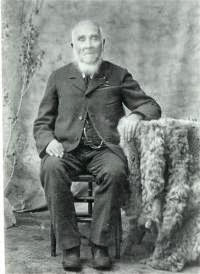
Ephraim Twitchell, son of Joshua Twitchell and Sarah Miller, was born May 19, 1803, in Dummerston, Windham, Vermont. The Twitchell families of America had descended from Benjamin Twitchell, who came to America from England in the year 1630.  When Ephraim was ten years of age, his parents with all the children moved from Vermont to the Ohio Valley, settling in Meigs County. When Ephraim was eight years of age in 1811, his father Joshua died from a war injury. Two years later, in 1813, his mother Sarah died from a stroke. Ephraim, being the youngest of the family, grew to manhood in the care of brothers and sisters.  Here in Ohio, he became a farmer and a stockman as well as a shoemaker. When he was twenty years of age, he married Phoebe Melissa Knight of Massachusetts. Two of their children were born there in Bedford, Meigs, Ohio: Anciel and Celestia Ursula. Their third baby, Eunice, was born February 15, 1830 in Schuyler County, Illinois, and died the same day. The following year the family moved to Springcreek, McDonough County, Illinois, being among the first settlers there. Phebe bore five more children while they were living in Springcreek.

In the spring of 1842, Ephraim and his wife and family joined the Church of Jesus Christ of Latter- Day Saints. In a short while, they were being persecuted by the mobs. One day, while Ephraim was away from home, Phebe was in bed with a new baby, a son named Joshua. The mobs came and carried mother and child out of the home and into a nearby orchard and left them there. Thankfully, they were not killed. Ephraim then took his family and moved to Nauvoo to be with the body of Saints. They were unable to sell their home so Ephraim buried a container of written information at each corner of the land in case any member of his family might return. After they moved to Nauvoo, their daughter, Amanda, was born on November 29, 1844. A little more than a year later, their oldest daughter Celestia died. This same spring of 1846, they were driven from their homes with the other saints and located in the vicinity of Council Bluffs, Iowa. Here, in the spring following, they farmed for a season on government land. They raised a large crop of potatoes and about one thousand bushels of corn. This helped to provide food for the saints that would come later.

In the early spring of 1848, Ephraim and his family took part in the most remarkable religious emigration of modern times, to Utah. They accomplished the long and hazardous journey across the plains with ox teams. On the way, at Winter Quarters, when the call came for the Mormon Battalion to help in the war against Mexico, Anciel, their son, was one of those who joined the Battalion and marched all the way to California.  Anciel's wife Louisa had her own team and wagon and she went along with the Twitchell families.  James Ephriam their forth child and second son, was a boy of 13 years, yet he drove an outfit of two oxen and took his turn like his father standing guard during this perilous journey. The other two brothers, Edwin and Orin, were 11 and 9 years, and their task was to drive the sheep across the plains.

Ephraim and family came to Utah in what is known as the Ezra Chase Company, arriving in late September 1848, in what is now the city of Ogden, Utah, then called Brown's Settlement. There was already an old log shack on the site, which had been erected by mountain men and trappers. Ephraim built a log cabin for their protection that winter, this being the first of the kind erected at that place. Sarah Celestia, their daughter was born here October 22, 1848, the first white child born in Ogden. It was a terribly cold winter with a great deal of snow, and they were very short of food supplies.

Ephraim Twitchell was a man of strong character, very energetic and a thorough American. In the spring of 1849, the family became influenced by the California Gold Rush. They left Utah and went to California (their son Anciel had remained in California after being discharged from the Mormon Battalion). Ephraim's brother Joshua and his family joined them on this trip. While crossing the Humbolt River in Nevada, they had to use the wagon boxes for boats, paddling them across and swimming the stock. In their further journey, coming to the Sierra Nevadas, they drove over the hard snow as on pavement. This was known as Donner Pass where three years before the Donner Party had perished by the winter storms. The winter of 1849-50 was passed on the Sacramento River at Vernon, where Ephraim took up a placer claim from which he took out one hundred and fifty dollars of gold, then abandoned the claim. Ephraim aided in the erection of the first American house built in Sacramento, receiving ten dollars a day for his labor. Going from that place to the now historic Sutter's Mill, he received at first twenty dollars a day. Later he was offered a large sum to haul logs to Sutter's sawmill with two yokes of oxen and an old Spanish cart, but he refused the offer as he was anxious to become established in a home of his own.

 In 1852, while carrying eight hundred dollars in fifty dollar gold "slugs" in a belt buckled around him, he was attacked by the noted Mexican bandit, Joaquin [pronounced Wah-keen], who had just broken out of Stockton jail. Ephraim saw him in time, however, to draw his pistol in advance of the robber, who then gave spurs to his horse and rode off without his expected booty.


The families were in Sacramento for about a year and they decided to settle in San Juan Bautista, Monterey County, California. The land there is a black rich soil and records show that they were there in September 1851, where they farmed and raised some cattle. Ephriam was an Elder in the Church and the President of the branch in San Juan Bautista. They held services in Joshua's home, as he had a large house. Then in 1856, Ephriam and family moved to San Bernardino, California. This is the first time the two brothers, Ephriam and Joshua, were ever separated any distance as they were very close as brothers.

One day as Ephraim was going to town in his wagon, he saw a man walking along the road carrying a satchel and a cloak. He invited the man to ride with him. The old man said, “Take your family back to Utah where the body of the Saints are.” Ephraim answered, “My boys will not go with me.” The stranger then said, “Yes they will, every one of them.” After they had stopped at an inn for dinner, the old man disappeared, leaving his cloak on the wagon seat. It was kept in the family for many years.  His words proved to be true, for the entire family moved back to Utah in 1857, and there Ephraim continued to be identified with Church work. They settled in Beaver, being among the first to pioneer the town and county of Beaver. 

They went by wagon train to Milford, Utah, and on to Beaver as some of the first settlers to make their home there. Phoebe Melissa died the next spring and her grave is said to have been the first in the Beaver Cemetery. 

Ephraim's family located on Indian Creek, which enters Beaver on the north (later called Manderfield). The Indians were thick and hostile. They took advantage of the settlers and expected to pasture their horses in the fields, and they would help themselves to a share of everything, food and all. They would steal and drive away the animals. The settlers never knew when their families were safe. Ephraim and his sons knew the language of the Indians and acted as interpreters on many occasions. Ephraim served in the Black Hawk War in the command of Captain Hunt, having many exciting experiences in combat with the Indians in that action. It was decided to call the Indians together and help feed them at the tithing office yard and hold sort of a Pow-Wow and appoint a recognized chief from among them. Most of the Indians agreed to this and were much better. Ephraim was the first Presiding Elder of the Church at Indian Creek, Utah, for several years. He later returned to San Bernardino on a mission for the Church. 

Ephraim later re-married; Sarah Hadden, 7 January 1860 and they had several children. He died at Beaver, Utah 23 Dec 1872, he and Phoebe Melissa are both buried in the Beaver Cemetery.


Phoebe Melissa Knight was the fourth child of Silas Knight and Eunice Higley. She was born June 14, 1804 at Tolland, Hampden County, Massachusetts. In 1810, at the age of six, Phoebe moved with her family to what is now Meigs County, Ohio. Three years later, the ten-year-old Ephraim Twitchell moved into the same area with his family, and the two were married in 1824. Phoebe's older sister Eunice Ursula had married Ephraim's older brother, Joshua, and the two families kept close ties throughout their lives. Both families, the Knights and the Twitchells, had moved to Ohio at about the same time and knew each other, and worked together.

Joshua Twitchell Jr. and Ursula Knight were married first. He was 22 years old and she was 19. They were married on June 24, 1816, only about 4 months before Joshua Sr. died. Ephraim Twitchell and Melissa Knight were married much later on March 1, 1824 in Pomeroy (where the Knights lived then, close to Bedford) Meigs County, Ohio. He was 21 and she was 20. The other daughter of the Knights, named Harriet, married Mr. Hysell. They all lived in Ohio for a long time. All of these families lived close to each other, and eventually traveled all the way to the West together. (However, Harriet and husband came to California a few years after the Twitchells.)

Melissa's parents, Silas and Eunice Knight, died in Ohio in 1839, and Melissa received one hundred dollars from the sale of land from her father's estate. Ursula received the same. These two couples, Ephraim and Melissa, and Joshua and Ursula, stayed together, traveled together, loved each other, suffered together, and helped each other although Joshua and Ursula and family remained in California as did Harriet and her family.


Thursday, November 12, 2015

Honoring a family Veteran with his story


In Memoriam: Information about Staff Sergeant Lowell David Nyborg on this Veteran's Day. Uncle Lowell was my mother's brother. He is the blond in the middle in the photo of his squadron.

The following was compiled and shared in a booklet at a Nyborg Family Reunion in 1997 after Lowell's death by Keith Nyborg, his younger brother:

As taken from information he had kept, items that had been sent to Mother and Dad, and remembrances of Elna at the time, as well as things he later told Elna and Roger.

Telegram to Mother from the Secretary of War dated April 5, 1945. As Elna recalls it was received by George Baum at his store in Drummond and he contacted Dad at the ranch. Dad came down to Uncle Bill’s house in Drummond, where we were living so we could attend school. Elna says she does not particularly remember Dad’s response, but Mother paced the floor, wrung her hands, mumbled to herself, and cried. Lowell had just turned 19 years old in January.

The telegram read as follows: Washington DC 2:50 a.m. April 5, 1945, Rhoda A Nyborg, Secretary of War desires me to express my deepest regrets. Your son, Sergeant Nyborg, Lowell D. is missing in action over Austria since March 23, 1945. If further details or other information are received, you will be promptly notified. Ulio, Adjutant General.

A few days later Mother received a letter from the Commanding General of the Fifteenth Air Force, dated 7 April 1945. It read as follows:

My dear Mrs. Nyborg:
Your son, Sergeant Lowell D. Nyborg, 39927358, has been missing in action since March 23, 1945. At that time, he served as top turret gunner aboard a Liberator which was on a bombing mission over St. Valentin, Austria. From reports we have received, it is known that while over the target, the bomber was severely damaged when it was hit by flak. Immediately after bombs away, the stricken aircraft left the formation and began to lose altitude. Before the plane finally passed from sight, four parachutes were seen to emerge. Since the ship failed to return from the mission, Lowell and his crew have been missing in action. The Effects Quartermaster, Army Effects Bureau, Kansas City, Missouri, will receive your son’s personal possessions in due time. From that point, they will be forwarded to the designated beneficiary. Much of the credit for the many successes we have had during the past months is due to the courage and ability of men like Lowell. Should there be any change in his status, you will be notified by the War Department. I earnestly hope that we shall hear of his safety very shortly.
Very sincerely yours,
F. Twining
Major General, USA
Commanding

Western Union telegram received June 6, 1945. Washington, DC, Mrs. Rhoda A. Nyborg, Drummond, IDA. The Secretary of War desires me to inform you that your son, Sgt. Lowell D. Nyborg returned to military control.
J A Ulio, The Adjutant General

Western Union telegram received January 12, 1946. New York, NY, Mrs. A.P. Nyborg, Drummond, IDA. ARRIVED SAFELY EXPECT TO SEE YOU SOON DONT ATTEMPT TO CONTACT OR WRITE ME HERE LOVE. SGT LOWELL D NYBORG 225PM

Western Union telegram received January 25, 1946.
Note to whom this telegram is sent and why:
GOWEN FIELD BOISE IDAHO 1150AM JAN 25
A P NYBORG BOX 212 FONE 0107R4 DRUMMOND IDAHO
LEAVING FOR SEPARATION CENTER SOON PLEASE WIRE ME $15.
SGT LOWELL D NYBORG 1220 PM

The following information is taken from a letter written by Lowell in response to an inquiry from The War Department.

Received your letter dated January 9, 1946, in regard to information concerning crew members of my crew overseas missing in action.

On the 23rd day of March, 1945, our plane left the 456th Bomb Group, stationed in Italy, on a mission over St. Valentine, Austria. Our plane was struck by flak in the course of the bomb run. After completion of the bomb run, we were losing altitude gradually and approximately 15 to 20 minutes after, the plane went into a spin. (Lowell was taken to a prison camp and then transferred to Stalag VII-A, Moosburg, Germany, by train. He was liberated April 29th, 1945.)
The four crew members in the waist bailed out before the plane went into the spin. I was standing near the bomb bay after leaving the upper turret. I had picked up the fire extinguisher as the pilot had requested. The bomb bay doors had never been closed. Before leaving the plane, I noticed the pilot half out of his seat and motioning me to bail out. The co-pilot was still in his seat. the other two crew members, Flight Officer Peter P. Mahoney Jr. and Sergeant William C. McDonald, I had seen nothing of after leaving the home base. They were stationed in the nose of the ship. On the way to the target and after the bomb run, there was an oxygen check during which I heard the two men on the interphones. I am sure no one was injured before the plane went into a spin.
After my parachute had opened, I noticed the plane still below me in a spin and heard the explosion as it hit the ground. I saw nothing of any of my crew members bailing out on my way down. I was captured as soon as I was on the ground and had no chance of going back to where the plane crashed. The above mention information is accurate to the best of my ability.

Lowell told Elna and Roger he was afraid when he bailed out he would be sucked under and down with the plane as it was going into a spin and losing altitude. He was the 5th one to leave. He said they were taught how to dispose of their chutes, but the Germans were waiting for him so when he fell back on landing they helped him up and said, “for you the war is over.”

Sunday, November 1, 2015

William Greenwood and Anne Hartley


William Greenwood was born March 4, 1819 in Heptonstall, Yorkshire, England, to William Greenwood I and Sarah Utley. The elder William was a blacksmith by trade, but at an early age he got a spark in one of his eyes. In trying to doctor it, he lost the sight of both eyes, so he never saw most of his thirteen children. He and his wife Sarah, all of his children, and some of his brothers and sisters, joined the LDS Church in England in 1840-41, and they emigrated to America. Although he was blind, he became quite handy at doing things with his hands such as making various articles of furniture, really specializing in good bedsteads. The family came across the ocean on the ship "Tyrene" which landed at New Orleans, with Joseph Fielding as captain. They settled first in Warsaw, Illinois. It had been a long and wearing trip of about eight weeks on the ocean. Before they could get adjusted to this new climate and conditions, they all came down with what was called "ague" with fever and chills. At times they were unable to help each other to get even so much as a drink of water. Seven of the Greenwood family members died of this malady within nine weeks, including William I and Sarah, his wife. They were all buried in or near Warsaw, Illinois. It was said of Sarah by her daughter-in-law Ann Hartley: "She was one of the best women that ever lived. She had a strong testimony of the gospel, to which she testified as she sat up in bed just before she died. She entreated her family to remain true to it. She talked in tongues."

William II (hereafter just referred to as William) must have grown up working in a clothing factory, as did so many of the children in that part of England, because as a young man he had become a steam loom overseer. He must have met his wife, Ann Hartley, in the factory, as she too was a worker at the looms. He was twenty years old and she was eighteen when they were married in 1839. Soon after their marriage, he followed his wife's lead in joining the LDS Church, and they came with William's parents to America. William had the ague along with the rest while they were at Warsaw, Illinois, and it left him so weak and debilitated that he couldn't work at all for a year and a half. Ann soon became so homesick that she thought she must return to England. William was not in favor of this, so he would not cooperate with her in any way in making the arrangements for the trip back. He did, however, return with her to England in 1843. They found work again at the factory, but he was never satisfied or happy. So, in 1846, he decided he would have to return to America to be with the LDS people, with or without his wife. That must have been a sorry parting, as she decided to stay in England. However, it didn't take Ann long to decide that her happiness lay with her husband, so she joined him again in about 1848. Upon his return to Warsaw, William had to accept work at fifty cents a day, as that was the going wage of the time.

William and Ann began making preparations to make the trek across the plains to join with the church members in Utah. In May of 1852, they were ready to start, arriving in Salt Lake in November of that year. They came with the Benjamin Gardner Company. Ann had born four children previous to this time, but two had died and been buried in England, so they had two living. Another son was born to them on the plains, and they named him William. This little family had only been in Salt Lake three weeks, barely enough time to get rested after such a strenuous trip, when they were called by Church authorities to go to Cedar City to settle. This meant another long hard trip into a very wild new region, and a great contrast to anything they could ever have imagined. After several years of trying to overcome the adverse conditions in Cedar City, most of the settlers became discouraged and disgruntled. They felt it was an impossible situation. Many planned to go to California, but the Greenwoods wanted to stay closer to the center of the Church. They had heard that there were good opportunities for homesteading in Millard County, so they took their ox teams and covered wagons and their children and set out in the winter month of February, 1856. When they got as far north as Beaver Valley, they camped on the bank of the Beaver river. They liked the area with its abundant supply of water, good supply of wood in the canyon, etc. They continued north until they got as far as Wild Cat Canyon, a narrow place which they found blocked with deep snow so that they couldn't get through. They turned back and decided to settle in Beaver Valley.

The wagon box was lifted off of the wheels and it became their first home in Beaver. They worked hard to plant grain, only to have it all spoiled by three weeks of rain after it had been cut. Their scant supply of provisions had become completely exhausted, and they had to live on the milk from one cow, along with wild berries, roots, and greens which they could find in the wild. William herded the town cows, barefoot all the year, wearing just buckskin pants which he had gotten from Indians. Gradually, through using every bit of ambition, good management or sheer ingenuity which they could muster, they accumulated a few animals and were able to eke out an existence until things got somewhat better for them. William built a log cabin and added on to it until there were three rooms. Soon the Indians became a real problem, and they decided to move closer to other settlers, several miles north of their first location. They first had a log house but later build a home of the native bluestone, and kept adding on until they had six rooms and an upstairs attic where their grandchildren would love to play in later years. The Indians were still a problem. One time, William was herding his sheep on the hills south of town when he was caught by a group of Indians. They threw him to the ground and drew a sharp knife across his throat in a menacing gesture several times. He didn't cry out or show the fear he felt, so they relented saying, "Heap brave man no squaw," and they spared his life. The Indians tried several times to steal a lovely little gray mare which the Greenwoods owned, and finally succeeded. After quite a bit of trouble, William got the mare back, after which the family decided to bring her into the kitchen at night for safe keeping.

Bluestone home still standing in Beaver at 190 South and 100 West.  It is on the national registry of historical homes.

In 1869, the Church called on William for a wagon and team to go east across the plains for immigrants. It was decided that young Barney, the oldest son, should make the trip. He was only sixteen and small, but he was responsible for his age. It was a long and arduous journey of six months. The Greenwoods had no thought but to answer the call, so while Barney was away, his father did two men's work at home. The Greenwoods, along with other families in the area, soon began to transport the goods that they could raise, selling them in other areas. Later, the US soldiers took up residence at Fort Cameron, east of Beaver, and they purchased many things from the settlers such as eggs, milk, cream, straw, hay and grain. So the standard of living began to increase. Sometime during this period, William met an Englishman who had just come from the "old country." He had a red silk scarf which must have created a nostalgia in William's soul, as he wanted it so much that he traded a little pig worth four dollars for it. The scarf remained in the family as a cherished relic.
 

After the death of William's wife in 1897, he lived with his daughter Mary Ann for two years. He was so pleasant and kind to his grandchildren that they always remembered him fondly. As there was now train transportation to Milford, 30 miles west of Beaver, Mary Ann and her husband thought they would take a trip to Salt Lake in October of 1899. They took William along with them and enjoyed the trip very much. On the return trip, the train made a stop at Clearwater (or Clear Lake) in Millard County. William was in a different car than Mary Ann and her husband, and for some unknown reason, he decided to get off the train. It was dark and stormy and the wind blew his hat off his head. He tried to follow and recover it, and while so doing the train pulled away, leaving him. He started walking along the track until he met up with an employee of the railroad who quizzed him as to where he was going and found out that he was lost. He asked the way to Fillmore, and the man pointed along the tracks. Next morning, the employee heard the old man was missing. He went out to look for him in the vicinity of where he had encountered him. He picked up his tracks in the direction of the Sevier River, only to find that he had stepped into a low place along the bank, which had caused him to stumble and fall into about two feet of water. Apparently he had been unable to recover himself, and so there he lay, drowned. An inquest afterwards brought out this weird story. His daughter and her husband knew nothing of his doings until arriving in Milford next morning, whereupon they started the investigation as to his whereabouts. It was a tragic thing to have happen while he was still enjoying good health. William's granddaughter, Luela White Storrs, wrote of him: "Truly William Greenwood was a man of deep and sterling qualities, never complaining of his adversity, but going ahead steadily against the greatest of odds, true to his faith and family. No one could live more faithfully and nobly."


Typed by Edith Baker, Feb. 1990
Source: "Life Sketch of William Greenwood the Second" by his granddaughter, Luela White Storrs.


Ruth Ann Greenwood (Glen's great, great grandmother) with her parents, Ann Hartley and William Greenwood

Ann Hartley was born into the home of Bernard Hartley and Mary Beck, July 26, 1821 at Addingham, Yorkshire, England. She had two sisters, Margaret and Martha, and three brothers, Barnard who died young, Joseph, and another Barnard. Her father was a clothing manufacturer near Burnley. It was customary at that time for little children to be carried to work at looms in the factories at a very early age. Ann related that she was carried on her father's shoulders as soon as she was old enough to start work. A never-to-be forgotten memory for her were the moaning cries of these little children being thus carried to work in the early morning hours. Of her mother, Ann said, "She was a very good looking woman, having white pearly teeth and a rosy complexion. She was a very good manager with quite a business sense." She thought her mother had some Jewish blood in her. Ann grew up thus being kept busy with factory life until she became very adept at the looms, being able to handle three with the help of one little girl by the time that she was married.  

Ann met William Greenwood who was a loom overseer. As they grew very fond of each other, they decided to get married, which they did when Ann was only eighteen years old. Since they both went on working, it seemed expedient that they should live in Ann's father's home, paying board. About this time, Ann heard the LDS missionaries preaching. She was very much interested in it, and began leaving her home, alone, to hear more of the gospel message. She was afraid to let her husband or family know what she was doing for fear they would not approve. As was to be expected, her husband became curious, so he decided to follow her one evening to see what was going on. He listened attentively to the message and became so interested that he began attending the meetings regularly with her. Ann's family hated to have Ann join, and she was the only one of the family ever to do so. She was baptized in September of 1840 and William followed in June of 1841.

William and Ann began making plans to go to America to be with the church members there. In 1841 they came to America, arriving November 24 at New Orleans. They settled in Warsaw, Illinois, but found it hard to adjust to the new life, as living conditions were very hard. Ann decided that it was just unbearable. Her family had told her that if she ever wanted to return to them to let them know and they would send her the money for the return voyage. She tried to talk William into writing to them to tell them of her desire to return. He wasn't in favor of the action, so wouldn't write the letter. She then went to another William Greenwood, a friend of theirs, and got him to write the letter for her. The money was immediately forthcoming. They returned to England in 1843, taking with them the little girl Martha who had been born in Warsaw. This child died and was buried in Burnley in 1844. Two other children were born to them here, Sarah and Foster. Foster also died and was buried in the same place as Martha.

William was very unhappy back in England, so he decided he would have to leave Ann there, as she still wanted to stay, and return to the new land alone, which he did in 1846 or 47. But Ann was not long in deciding that living with her husband was worth more than living in England without him. She went to work and earned enough money to bring herself to Warsaw in 1848. Their son Bernard was born in Warsaw in September of 1849. They began making preparations to cross the plains to Utah, and left in May of 1852. At one time, the animals became frightened and stampeded while Ann was driving. She had had a baby shortly before and was not yet strong enough to walk by the wagon. She hung onto the animals, talking gently to sooth them down, until they finally continued on without any harm being done. What a breathtaking experience for this factory maid from civilized England! When it had come time for baby William to be born, the family merely pulled off the road behind the wagon train and, with the help of some of the kind women, the baby came into the world. That baby lived to be one of the healthiest and long-lived of the family, so everything must have gone well.  

They arrived in Utah in November and soon were called to help settle Cedar City. Their first year in Cedar City they lived in a sort of cave or dugout. After several discouraging years in Cedar City, the family relocated in Beaver. The first year in Beaver was very hard for them. The only shoes Ann had were moccasins purchased from the Indians. Her daughter Mary Ann wrote: "Having no dress to her back, she wore what was called a sack, along with a quilted petticoat which she secured by making a quilt for a neighbor. Ann went out doing washing or helping in any way when possible, but this was not often, as very few could afford such a luxury in that day." Ann had never had any experience in making clothing or doing housework before she was married, as she was practically raised at the loom in the factory. She became very adept at all kinds of such work connected with raising a large family. She was a very good cook and housekeeper, and she could make clothing in all its steps, starting from the sheep's back to the finished product. Mary Ann wrote: Clothing was extremely scarce. It was not an uncommon thing for my mother to bathe her children on Saturday night and put them to bed perfectly nude while she sat up and washed and dried their clothes by the fire so they could have clean things for Sunday." The boys also sometimes ran around the house in their shirt tails while their trousers were being mended. Even her husband had to go to bed when his trousers needed mending.

At this time, William and Ann had only one quilt for their bed. It had worn very thin in the middle. In desperation, they tore it in two so that they could each make better use of their piece, as they could tuck it in around their backs a little better. They kept wood fires burning day and night, as wood was quite accessible, and it did help in keeping the biting cold away.


An interesting incident of this first year was of Ann walking a mile or so to an old fort to milk a teacup of milk from a cow that was about to go dry. Her husband called her a fool for doing it. However, the cow didn't go dry; her milk came back, giving the family all the milk they needed and it became their chief food. Then her husband had to admit it hadn't been foolishness, but extreme foresight and wisdom. At one time, the family lived on potatoes and salt for three weeks. They had not had a taste of bread all that time. They went up to North Creek to gather bullberries at this time. When Ann got out of the wagon to help gather the berries, she was so weak and faint from hunger that it was impossible for her to help gather any berries. These bullberries were a great delicacy, heated up in their milk. Hunger was the sweetener for the dish. Bullberries were the only fruit they had for years. They made many uses of them, such as drying them for storage and use all through the year. In later days, they made dumplings of the berries with the other usual ingredients which gave a most delicious dessert. Although their economic situation gradually improved somewhat, as late as 1863 when Ann's baby Rachel was born, Ann could not provide a single piece of clothing for the baby to wear. It was only through help from kind neighbors that the child had any clothing at all. In 1861, when Titus had been born, Ann could only scare up two cotton diapers. Every family in Beaver secured a barrel of molasses from Utah's "Dixie" for the winter. Except for an occasional bit of brown sugar, this was their only sweet flavoring. Molasses candy combined with parched corn was their greatest delicacy. Ann would make molasses candy loaded with cayenne pepper whenever a cold appeared among the children. 


Eight of Ann's children grew to maturity, and soon there were grandchildren. They were always welcome in Ann's home. Cookies and apples in season were always on hand. It was great sport to run and climb among the orchard trees and in the cattle corral and barn. Most of all they loved to play in "Grandma's Attic." They took picnics together and picked the yummy apples from the trees in the fall. Ann was a dearly beloved mother with a sweet disposition. She was a hard worker and a good example of the sturdy, long-suffering, patient pioneer woman of her day. She was crippled up for many of the later years of her life so that she had to use a cane to get about. She did much of her housework sitting and moving about on a chair. She passed away in her bluestone house in Beaver on July 18, 1897 at the age of 76.


Typed by Edith Baker, Feb. 1990 Source: "Life Sketch of Ann Hartley Greenwood" by her granddaughter, Luela White Storrs.

Sunday, October 18, 2015

Phillip Baker and Harriett Ann Phillipo Thompson


Phillip Baker


Phillip Baker was born October 11, 1821, in Edding Greene, East Dereham, Norfolk, England.  He and his mother, Anne Bone, joined the Mormon Church and he was baptized on Christmas Day of 1848 or 1849.   His father, Philip Baker, Sr., was very unhappy about his conversion and expelled him from his home.   Phillip was 27 or 28 years of age at this time.  Phillip emigrated to America in 1851, sailing on the old-time sailing vessel named Golconda, the same ship on which his future bride would come over two years later.   He landed at New Orleans, then traveled up the river to St. Louis, and from there traveled overland to Council Bluffs. He was taken on by Orson Pratt to drive his team across the plains. After arriving in Utah, Phillip stayed one month in Salt Lake City and then went on to California.  He helped to plant and raise the first wheat crop in the San Bernadino Valley.  He also lived for a time in Bakersfield, California, which town was evidently named after him.  While in California, he panned a bag of gold worth $500. 


Phillip returned to Utah in 1857 or 58, and settled in Beaver, where he met and married the pretty Harriet Ann Phillipo Thompson. Phillip was 23 years older than Harriet Ann.  They were later sealed in the Endowment House in Salt Lake City by Amasa Lyman. Phillip was ordained a High Priest in 1873 and was set apart as a counselor to Bishop Shepherd in Beaver, which position he held until the Beaver Stake was reorganized, at which time he was ordained a High Councilman under the hands of Apostle Erastus Snow. 

Phillip Baker was an Indian War Veteran, and he became very friendly with some of the Indians in the Beaver area.  On one occasion, he helped with the burial of an Indian.  They went up east of Beaver on a hillside, dug the grave, wrapped the Indian in his blanket and placed his gun and his belongings in with him.  Phillip would often loan his horse and saddle to the Indians, and he also often fed them.  They would come to his house and ask for “Baker.” Phillip was a good farmer in Beaver.  He had fine horses, many cows, pigs, chickens, and he raised all of his own hay, grain, and potatoes.  He hauled poles from a canyon for building purposes, and it came to be called Baker Canyon, after him.  Phillip passed away at the age of 79, leaving Harriett Ann with eight children.

Typed by Edith Baker, Mar. 1990 Sources: 1) History of Phillip Baker by Zelnora Nielson, a daughter of Phillip and Harriet Baker. 2) History written by Harriet Marintha Pendleton in May, 1942. Typed by Johanna Baker in 1961. 3) Letter obtained by Marintha Pendleton from the Daughters of Utah Pioneers, Nov. 1959. It is a letter written by Phillip Baker prior to his departure from Council Bluffs to Salt Lake Valley. 4) History written by a sister of Marintha Edwards Pendleton. 


The following letter was obtained by Historic Letters of the Past from Daughters of Utah Pioneers, November 1959, obtained from Harriet Marintha Edwards Pendleton, 1961. The letter was written by Phillip Baker, son of Phillip Baker and Anne Bone prior to his departure from Council Bluffs to Salt Lake Valley.


Council Bluffs, May 30, 1851 
Dear Parents: I take this opportunity of writing to you, hoping to find you in good health, as it leaved me at the present, that God for it. Our vessel set sail February 1st and landing in Orleans on the 6th of April. We left Orleans on the 9th of April and reached St. Louis on the 15th of April. We left Saint Louis on the 25th of April and reached Council Bluffs May 20th. Dear Mother, I am glad to inform you that I am going through to the valley with Brother Pratt (Orson) to drive for him. The reason I did not write sooner was because I wanted to know whether I was going through to the valley or not. Give my love to all my brothers and sisters and tell them I expect to soon meet them in the valley of the mountains. Give my respects to Mister Stains and tell him I am quite satisfied with this country. Land is very cheap in this country and it does not cost much to keep cattle for there is plenty of land laying waste, no one to own it. Give my respects to Mister Bates and tell him it is a good land for him. It is a good place for tailoring, for people wear coats here. 
From your affectionate son, Phillip Baker


Harriett Ann Phillipo Thompson

Harriett was the daughter of William Phillipo Thompson and Ann Mariah Fellows. She was born March 28, 1844, at East Dereham, Norfolk, England, and immigrated with her parents to Utah in 1853. She wrote the following on April 13, 1913, when she was 69 years old: 

"I crossed the sea in the old-style sailing vessel, "Golconda" by name, with Mr. Kerr as our sea captain, and was 70 days sailing from Liverpool to New Orleans. We were delayed by the dismantling of the vessel at sea through a severe storm. We went from New Orleans to Keokuk (a city opposite Nauvoo, Illinois), then waited three weeks for teams to be fitted up for crossing the plains, then started out for Salt Lake City. The teams were divided into companies of tens, each ten having a captain under the main captain, who was Joseph W. Young. Thus my father started on the long journey across the plains with four young children and a crippled wife. She was sick all the way. Father had to drive the ox team by day and stand guard against the Indians at night, and herd the cattle. Mother, being sick and a cripple had to ride all the way. "Myself and two brothers, one older and one younger, had to walk. [Harriet would have been nine years old, her brother William ten, and brother James eight.] The baby [Sarah Ann] was ten months old. Well do I remember our feet being sore and blistered, how the Indians attacked us and stole my father's watch, how my mother lay sick in the wagon at the point of death, apparently with Mountain Fever, and how we one day camped at noon on the Platte River and Brother Joseph W. Young, our captain, administered to her and blessed her that she should live to see the Valley of Salt Lake City. We arrived in Salt Lake in the month of October, after a hard and tedious journey of a little over nine months [from the time they left England]. "My father went to work for President Brigham Young as a miller at the grist mill. We stayed there a few years. He was there at the time of the great grasshopper war. Then we went to the ninth ward and worked at Bnners [sp?] grist mill, stayed there until the great move in 1858 [when the saints moved south at the time of the coming of Johnston's Army], then went to Beaver City, where I was married to Phillip Baker, March 2, 1860. I am the mother of eight children, three sons and five daughters, have buried two daughters [Mariah Elender and Mary Jessamine] and one son [Phillip William], and have been a widow since 1901." 


Life History of Harriett Ann Phillipo Thompson Baker by her great-granddaughter, Norene Baker Sharp, 1956 

"Grandfather, because of Indian troubles took his turn with other settlers as picket guard, thus leaving his wife alone part of the time.  No modern conveniences had this noble woman in her home, and at this trying time, she only a girl of seventeen, went through the pains of childbirth, with no doctor, only a midwife to give what little and simple aid she could. With only the little that pioneer women had, grandmother really made her house a home. She had a wonderful personality. She was very handy with a needle, both in plain and fancy sewing, also as a cook. I used to think no one could cook quite as well as mother and grandmother. She knew how to prepare and arrange many appetizing dishes. 

Grandmother experienced many experiences with the Indians. One day, two large Indians came to her home. Grandfather was off guarding the town against Indians. The Indians went to the grindstone and began sharpening two large knives, which took them about an hour. They often would flourish the knives in the air. They then came begging for food, and grandmother gave them all she could spare, and they were still not satisfied. So she put my mother, Harriet Marintha, out of the window on the opposite side of the house from where they were and told her to run across for Mary Mayes, for her to come. Sister Mayes was not at home. So she ran another block to Sister Cecil Pollick, a very large Scotch lady. She hurried to Grandmother. The Indians were back at the grindstone. Sister Pollick went up to the grindstone and took off the handle and told them to go, and did it in such a brave way that the Indians left. She had brought her gun with her and pointed it at them. 

For years she was secretary in Relief Society, a "block" teacher [now called visiting teacher], chorister, besides her numerous duties as a pioneer woman. She still had time to compose poetry. One side of her nature I must mention was her humorous one. She was very witty, the life of a crowd, and a good mixer and a real leader.


Harriett was the mother of eight children, three sons and five daughters. She was a hard working woman. She washed and corded wool, spun yarn, and made her own dye for her cloth. She used an old-fashioned loom for many years, and wove carpets and rugs for other people. She gleaned wheat, and her husband would crush it between two big flat stones for mush. Harriet made straw hats for her children and once received a first prize in a contest for a sailor hat she had made by hand for her daughter Nora.   Harriett's husband died in 1901, leaving her a widow for 16 years. She worked so hard, she got rheumatism in her arms. Her son Cliff finally had to dress her and comb her hair in the last days of her life. Harriet Ann lived out the rest of her days in Beaver. Her grandchildren remembered that she was a very short woman and quite frail. She evidently had two buggies. One of them was a white-topped buggy with fringe on the top, and it was used as a hearse to carry the dead. Daniel Ray Baker was carried in this buggy after he died. Harriet Ann died July 1, 1917 at the age of 73, and was buried in the Beaver cemetery. It was only a few months later that her son Daniel Ray (Glen's great grandfather) followed her in death." 

Daniel Ray Baker with his sister, Zelnorah Alminia, and brother, Rudger Clifford


The above photo was taken at a Baker family reunion about 1957.  Raymond O. Baker, son of Daniel Ray Baker, and his wife, Elma June Smith Baker are in front of the two tree trunks on the back row in the center of this picture.  Their son, Philip Baker, stands between his parents and their daughter, Bonnie, stands on her mother's left and the viewer's right.

Friday, October 9, 2015

A weekend at the Blue Boar Inn


Last April my husband and I celebrated our 40th wedding anniversary.  As part of that celebration, our children gave us a gift card to be used at the Blue Boar Inn in Midway, Utah.  This lovely Inn sits just south of Wasatch State Park and has beautiful mountain views.  We decided to save our gift for a stay during Fall color time.


The Inn has old world charm (lots of it) and they serve wonderful food.  The complimentary breakfast was beautifully presented and expertly cooked by the on site chef.


We loved our two night stay in this beautifully appointed Inn.


We were greeted in our charming suite with a rose, chocolates, terry cloth robes, and of course, a stuffed boar.


We also received a little gift book featuring selected readings from several authors.  You see, every room is given an author's name with decor hinting at the time period in which they lived.  We were in the Elizabeth Barret/Robert Browning Suite which included a cozy fireplace and four poster high up bed with a lovely canopy.  Go here for photos of the rooms and suites.


After a leisurely late breakfast on our final morning, we decided to take the long way home.  We crossed the road into Wasatch State Park and headed north up the mountain side.  This was our view looking back at the Inn and Midway.  The Heber Valley cloud cover was stunning.


We were on Guardsman Pass road which took us into the mountain tops with mountain meadows heralding fall.


It was lovely.  The road came to a junction where one could choose to go to Park City or west to Big Cottonwood Canyon.


We chose to descend into Brighton and Silver Lake at the top of Big Cottonwood Canyon and then on down the canyon to the Salt Lake freeway system and home.  The aspens were beautiful.  It was a glorious day following a few days of rain.  It was a wonderful weekend.  Special thanks to our very generous and special children and their spouses.

Thursday, October 8, 2015

A birthday Saturday


Grandpa Glen loaded up his bubble machine, bottles of bubbles, and took it with him to Heber Valley last weekend.


It was for the birthday girl on her birthday.  She wears a Snow White costume well.


She had a great time with her cousin and her brothers.


I call them the Three Musketeers.


They were into bubble fights.  Little sister was into touching them with her fairy wand.


Preparing for their next charge.


If you tell her you are taking her picture this is the face you will photograph.


If you take a picture secretly, you will see those beautiful eyes.


The clouds took turns with the sun highlighting the bubbles.


Inside was prepped for presents and cake.


After a bath, the princess was ready to share her daddy made castle cake. . .


with the boys.

The candle was pretty amazing with lights, action, and music.


She was a bit hesitant about the show so her brother helped her out.


I made her a sock monkey and dresses to match.  I can't believe she is already three.

Wednesday, September 30, 2015

My kind of canning


I created a canning jar quilt using Lori Holt's new book, Farm Girl Vintage.  I thought it would be the perfect September quilt to put on display.  When a young mom during the first time I lived in Utah, I would always can fruit just as my mother did when I was a girl in Idaho.  I can't even fathom how many pears I have peeled in my lifetime.  No more canning for me, so a canning jar quilt was perfect.


I used a bit of this and that for my jars but mostly Pot Luck fabrics by American Jane.  I added two borders that Lori did not in her pattern.  The red is from her new line of fabrics, Modern Vintage, and if you look close you will see that the print is canning jars.  Happy canning season and happy Fall!